
Home Insulation

Authorized Contractor

15,000+ CT Homes Insulated & Weatherized

JT Energy LLC’s insulation installation specialists bring proven experience and professionalism to every project. Our team is fully qualified, insured, and committed to delivering high-quality insulation solutions that improve comfort and energy efficiency. We guide homeowners through available savings opportunities and handle the qualification process to help reduce the cost of insulating your home. Trusted by thousands of households, JT Energy LLC is dedicated to helping homeowners create more comfortable, efficient living spaces with confidence.

Trust Only the BEST Insulation Contractor in Connecticut

Our Insulation Services

Insulation Materials

Learn more about insulation materials, their properties and HCP’s expertise.

Spray Foam

Blown Cellulose

Blanket/Batt

Rigid/Foam

Insulation Areas

HCP contractors handle complex insulation tasks daily from crawlspaces to attics. Learn more.

Attic Insulation

Basement Insulation

Ceiling Insulation

Crawlspace Insulation

Duct Insulation

Floor Insulation

Foundation Insulation

Wall Insulation

At Home Comfort Practice, we follow building science.

Insulation Materials

There are many materials and techniques for insulating your home. Different types of insulation have unique properties making them suitable for specific applications, all of which must be taken into consideration for each project. The R-value, or Resistance Value, measures the rate by which heat moves through an insulation material. Higher R-value results in lower heat transfer and higher insulation performance. Our team will advise you in selecting insulation materials that optimize acoustic performance and sound proofing, fire resistance, and effectiveness as moisture/vapor barriers. The chemical composition of each material also confers physical characteristics like weight, texture, porousness, flexibility, and safety that determine how they can be applied in different situations.

Cellulose Insulation

Cellulose insulation involves blowing fiberized newsprint into areas of a house at high pressure. It was invented by the military in the 1940s and gained prominence for residential use in the 1950s. The installation techniques, composition and manufacturing of cellulose insulation have been perfected over the decades to make it among the most efficient, greenest, safest and most cost-effective forms of insulation on the market. Home Comfort Practice installs cellulose insulation blown in cellulose in attics and exterior walls because it is clean, green, and effective. What type of insulating material would you use to surround your family? (Volatile petrochemicals?)

Cellulose Insulation is Green and Healthy

The contents of cellulose are simple: recycled newsprint reduced to cellulose fiber (83%); the naturally-occurring mineral, borate (16%); and mineral oil (1%). Borate contributes to superior flame retardancy, mold deterrence, and insecticide properties within the insulation. Mineral oil suppresses dust and enhances the bond between the fire retardant and cellulose fibers. That’s it! The energy costs of production for cellulose insulation are among the lowest of all insulation materials. In addition, no hard to pronounce, non-renewable and potentially unsafe petrochemicals are present in cellulose insulation, ranking it among the greenest and safest insulation materials.

Cellulose Insulation Manages Moisture

Cellulose, like the framing in your home is hygroscopic, meaning that it has the ability to disperse moisture . The hygroscopic properties of cellulose ensure that the moisture is redistributed, keeping the concentrations of moisture per inch very low. This property is highly protective as it prevents mold and rot by denying these organisms the water that they need to grow. As a means of comparison, tests conducted on 2×6 fiberglass insulation , including an added polyvapor barrier show that moisture levels in the exterior sheathing remain considerably higher than in a dense-packed cellulose insulated wall, even without an added interior vapor barrier.

Cellulose Insulation is Fire Resistant

The dense fiber structure and fire retardants in cellulose insulation slow the spread of fire through a building, giving occupants more time to escape and firefighters more time to save the structure. According to GreenFiber, their cellulose provides as much as a 1-hour firewall, and proves to be up to 57% percent more fire resistant than a structure insulated with fiberglass. Cellulose, when exposed to fire, produces negligible amounts of smoke, which also helps to prevent the loss of life in a structural fire. Cellulose insulation is not flammable, combustible, or explosive, and it presents no unusual hazard if involved in a fire.

SoundProofing Properties of Cellulose Insulation

Two common measures of noise reduction are the Sound Transmission Class (STC) and the Noise Reduction Coefficient (NRC).Sound Transmission Class (STC) is a measure of the decibel (dB) decrease as sound passes through and is absorbed by a given material. A quiet home has an STC 40 rating. For residential locations, an STC between STC 52 and STC 56 is even better. The Noise Reduction Coefficient (NRC) measures the amount of sound a material absorbs or reflects on a scale of 0 to 1. No sound is being absorbed or reflected at 0, and all sound is absorbed or reflected

Installing Cellulose Insulation

Loose-fill Installation

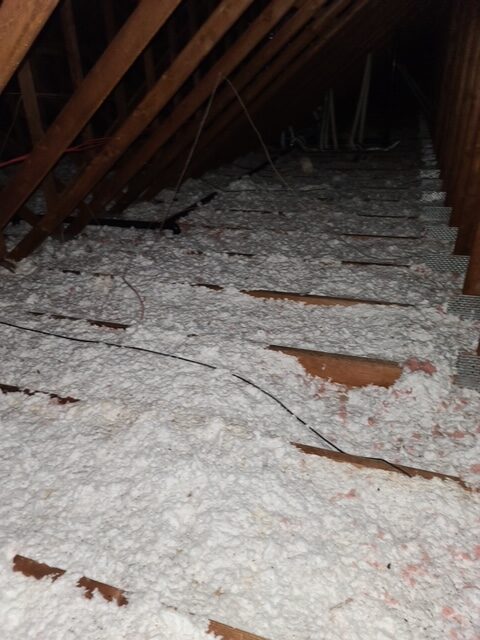
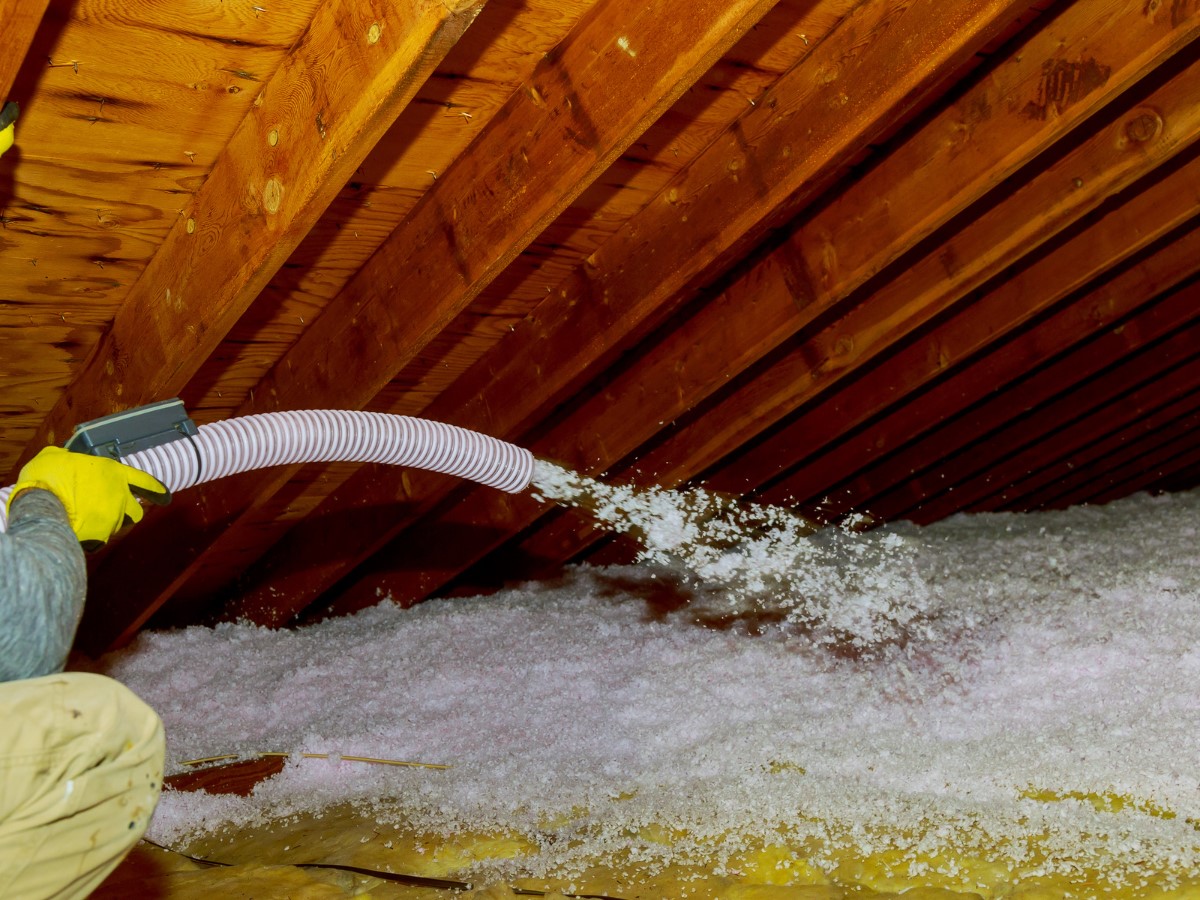
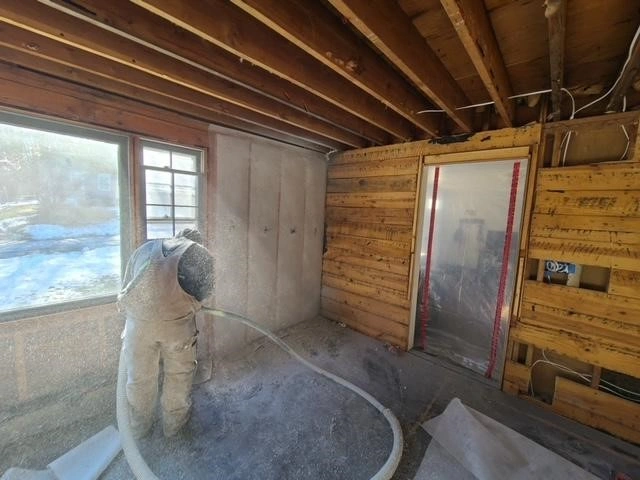
Loose-fill installation blows the cellulose material onto the attic floor until a 10″ to 18″ blanket is established. For dense-pack installation, 3″ circular holes are drilled into walls or floors, a tube is installed into the cavity, fiber material is blown into the enclosed cavity until it is filled, and holes are sealed and restored. Loose-fill installation achieves a high R-value (resistance to heat flow) of R-3.8 per inch. Dense-pack installation achieves approximately R-3.6 per inch

Dense-pack insulation

Dense-pack cellulose insulates and air seals, and it maintains its R-13 thermal resistance value by blocking air flow through the wall cavity. When fiberglass insulation has been used, the fluffy, cotton-like material permits air to flow through the cavity and degrade the fiberglass’ R-value.

Attic floor - loose-fill insulation

EPA Energy Star recommends at least R-49, approximately 14″ of loose-fill cellulose, at the attic floor of homes in Connecticut. Attic insulation levels greater than R-49 will further re-enforce the thermal barrier between your living space and the attic.
Heat loss and wasted energy (and money) occur when heated air escapes the living space and enters the attic. Air sealing all penetrations and framing intersections at the attic floor and installing sealed covers over house fans, bath fans, recessed lighting cans, and attic stairs will effectively eliminate the waste.

Exterior walls - dense pack insulation.

Most walls are constructed with 2″ x 4″ studs, which provide 3.5 inches of space between the exterior sheathing (plywood) and interior sheetrock. Older homes typically have very little or no insulation within these spaces.

Insulation Rebates: 75% to 100% off your cost!

Get back up to 75%-100% of the cost to fully insulate your home. For a limited time, Energize Connecticut programs cover $1.70/square foot for Eversource and United Illuminating customers. Combined with low-interest payment plans, your out-of-pocket cost for lifetime energy savings and comfort could be $0.00.

Spray Foam Insulation

Intro to Spray Foam Insulation

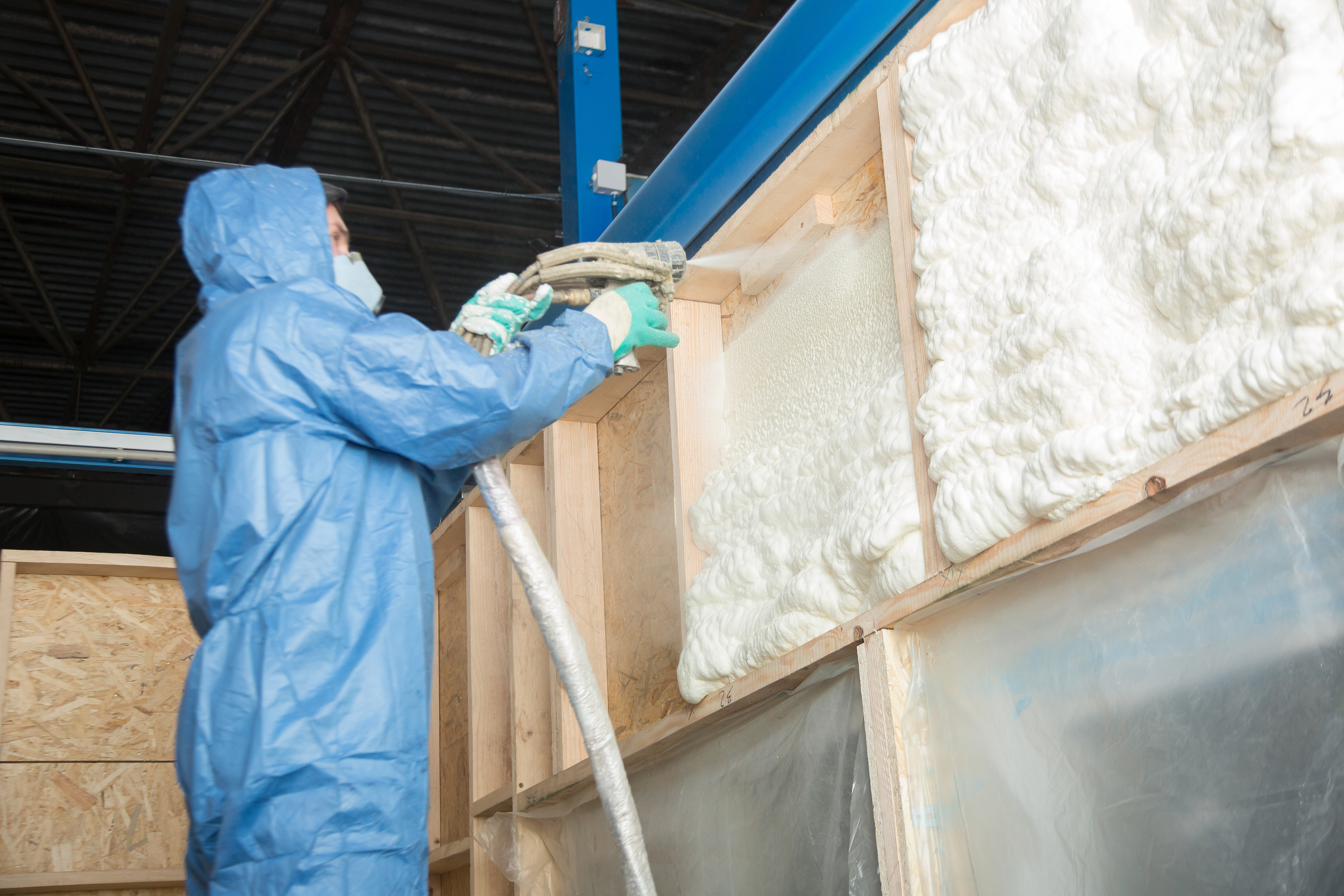
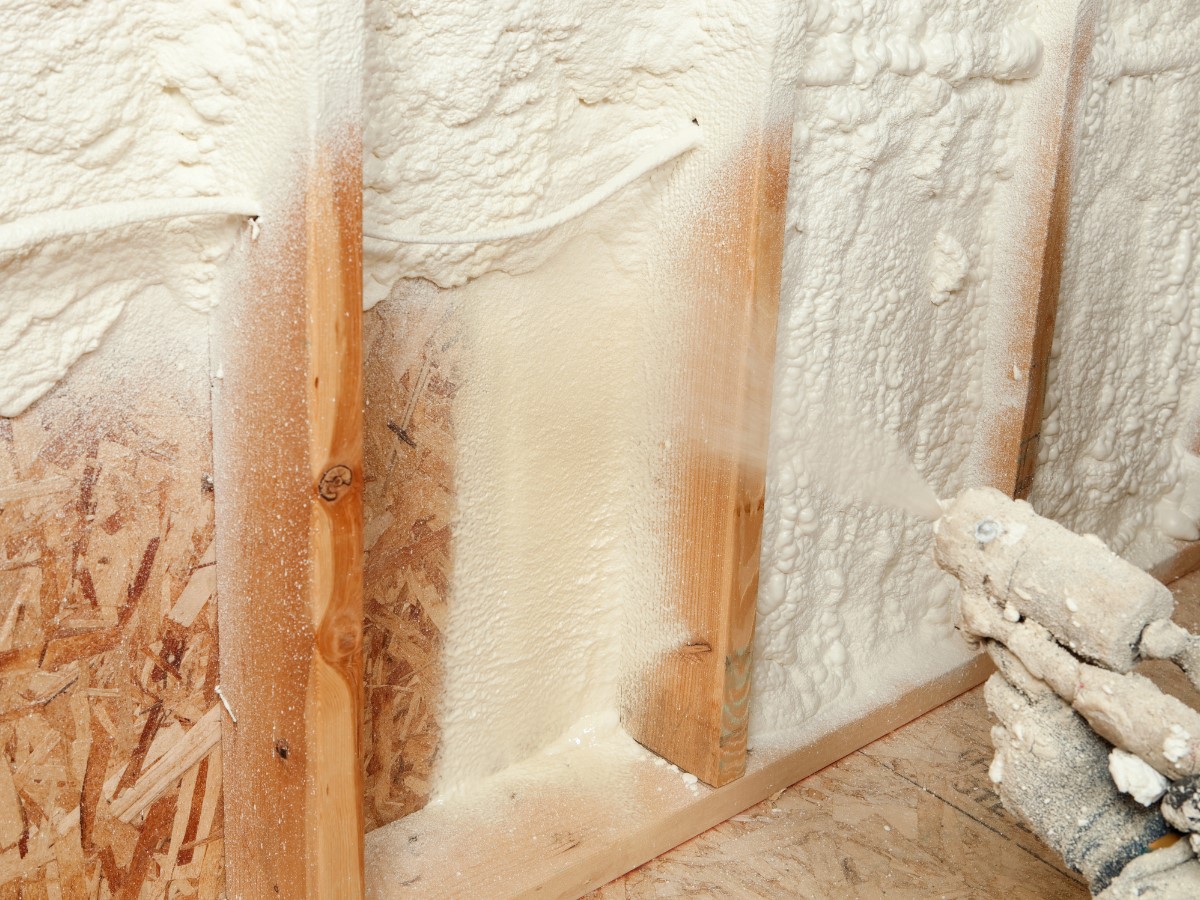
Spray foam insulation has the ability to create airtight envelope within the building structure, providing effective air sealing. This also prevents convective heat transfer from interior to exterior during as the heat is prevented from escaping through gaps in the buildings envelope. Medium-density closed-cell and light-density open-cell are the two main types of spray-in insulation foams. With closed-cell foam insulation cells are closed and filled with a low-conductivity gas, whereas open-cell foam cells are open, lower density and filled with carbon dioxide. The former has medium/high-density and the latter has a sponge-like appearance and texture. They both expand into the shape of the cavity within which they’re applied, filling and sealing them. Open-cell spray foam absorbs and holds water and is vapor-permeable and is unsuitable for areas with moisture while closed-cell spray foam has a far better R-value, is air-sealing and much less permeable.
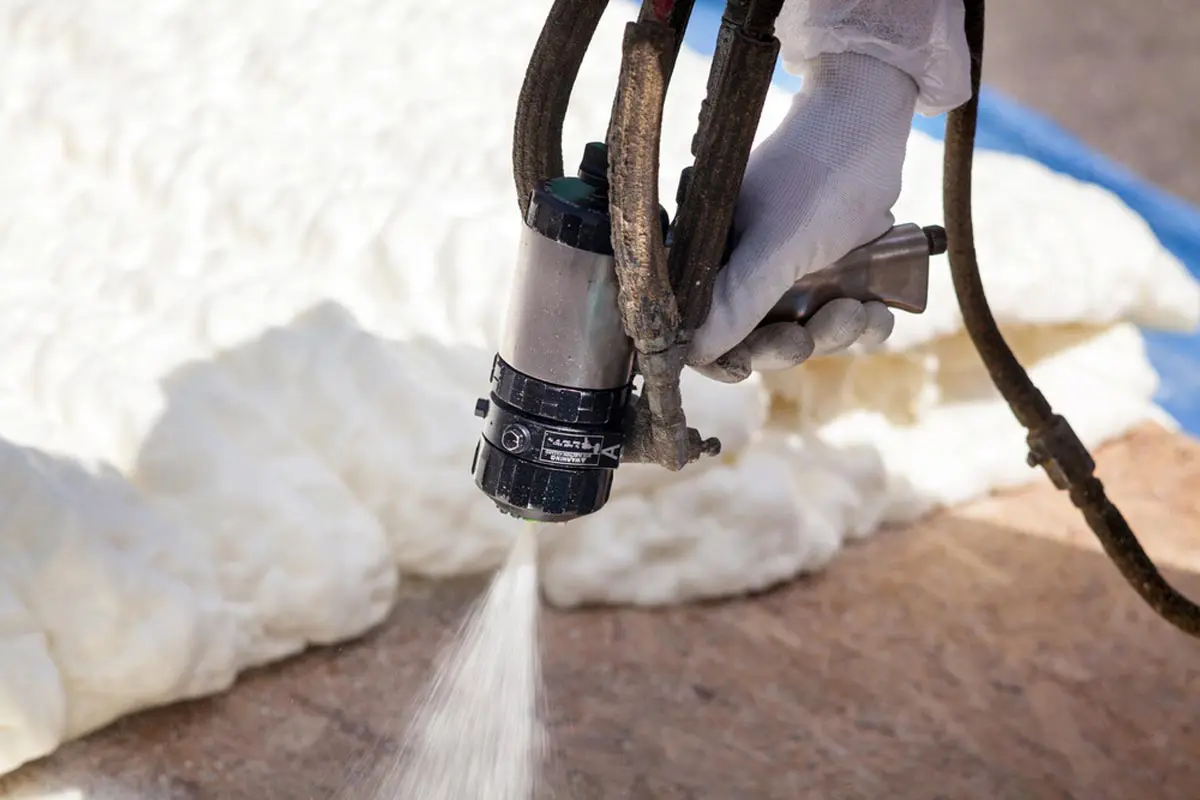
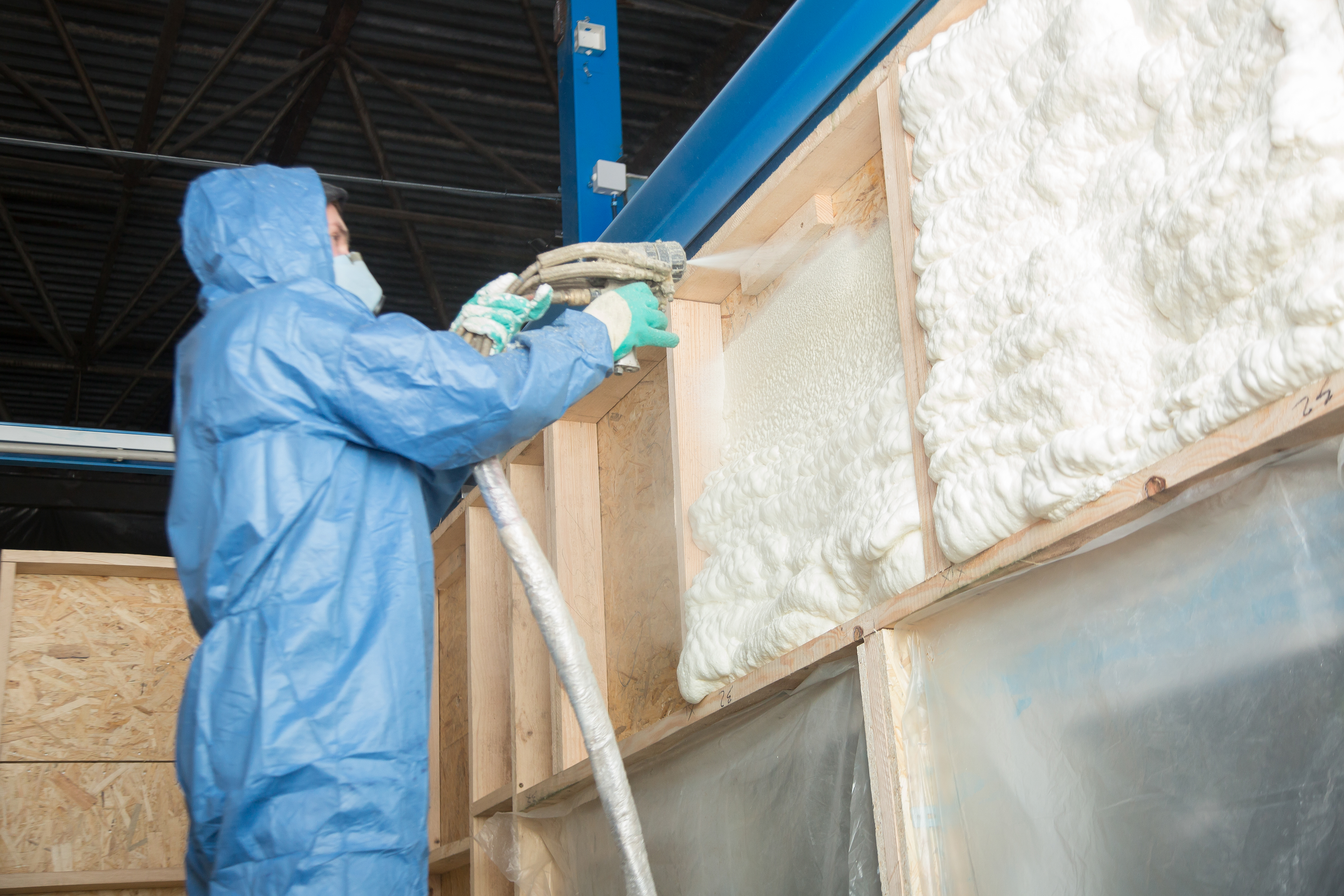
During installation, a two-component mixture comes together at the tip of a nozzle, forming an expanding foam that is sprayed into wall cavities, or blown into holes drilled into a cavity of a finished wall. Foam insulation can also be sprayed onto roof tiles, concrete slabs and under floors. The toxicity of the volatile compounds dissipates as the mixture hardens and cures. Slow-curing liquid foams are also available and designed to flow over obstructions before expanding and curing, and they are often used for empty wall cavities in existing buildings.
The cost of spray foam insulation varies based on the type, composition and installation methods required, but they’re usually all more costly than other forms of insulation. For example; closed-cell foam has a greater R-value and provides stronger resistance against moisture and air leakage, the material is also much denser and is more expensive to install. Open-cell foam is lighter and less expensive but should not be used below ground level where it could absorb water.

Spray Foam Insulation

What is the best type of spray foam insulation?
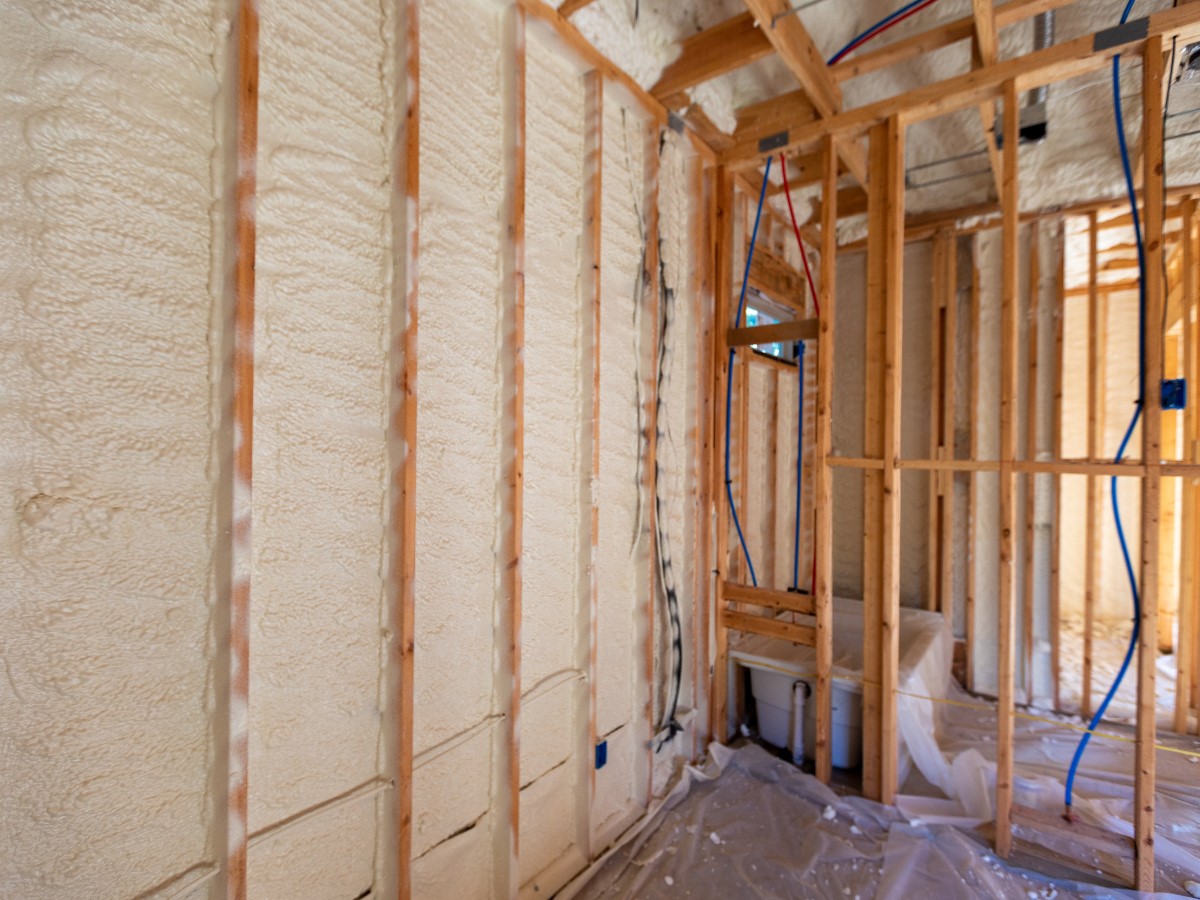
There are two broad categories of foam spray insulation solutions: closed-cell and open-cell. In closed-cell foam insulation, cells are closed and filled with a gas allowing the foam to expand and fill the space around it. The high-density cells provide for a higher R-Value. Alternatively, the spongy, open-cell foam insulation is less dense. Open-cell foam insulation spray is cheaper but more likely to absorb water, and has a lower R-value and is less suitable in high moisture areas like basements. Open and closed cell foam spray insulation comes in a variety of chemistries including: Cementitious, Phenolic, Polyisocyanurate (polyiso), Polyurethane Icynene and Tripolymer, each conferring unique properties.

What are the advantages of spray foam insulation?

Spray insulation expands to fill even the smallest surrounding cavities, creating an effective air barrier. It is ideally suited to fill irregularly shaped areas, and filling gaps around obstructions. These properties make spray foam insulation very efficient at reducing air leakage in holes and cracks, especially around electrical and plumbing penetrations.

What are the best uses for spray foam insulation?
At HCP we prefer to opt for the greenest solutions wherever possible and think the best guidance is to use spray foam strategically and sparingly. Spray insulation is very versatile and can be used in a host of locations. From enclosed existing walls, open new wall cavities, unfinished attic floors and even existing finished areas. Closed-cell spray also has a very high R-value. There are however more cost-effective, safer and greener solutions to insulate many of those locations without the risks of toxicity and off-gassing. We advise limiting the use of foam to hard-to-reach and obstructed areas and limited localized sealing application.

What are the advantages of spray foam insulation?

Open-cell spray foam insulation has an R-value between R-3.5 to R-3.6 per inch. In other words, filling a 2×4 cavity yields about an R-13. Closed-cell spray foam has a far better R-value at about R-6.5-7 per inch.

Blanket insulation: batt insulation and roll insulation.
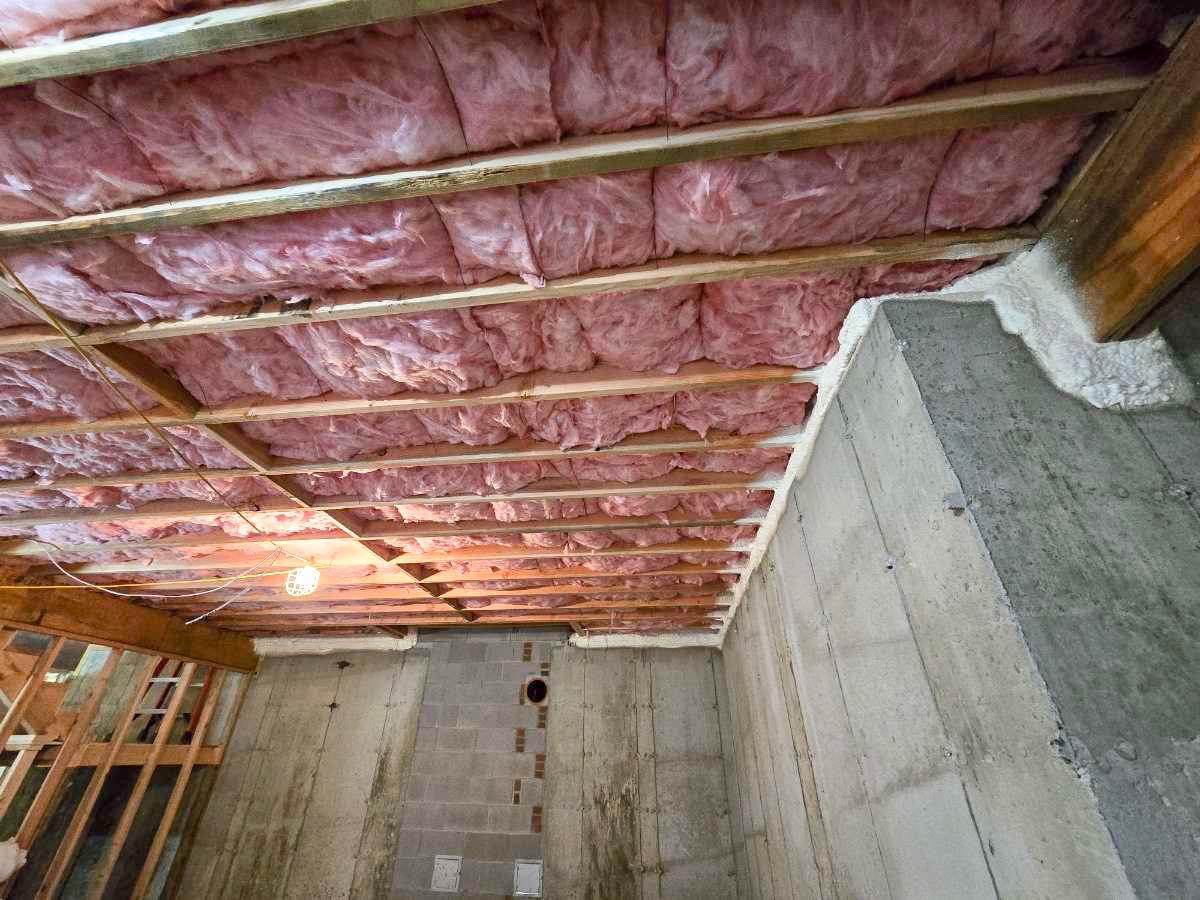
Roll and batten insulation are among the most readily available forms of insulation products. They come in batts or rolls made up of insulating fibers, the most common of which is fiberglass insulation.They’re also available mineral wool (also known as rockwool insulation) and various other natural or synthetic materials. The sizes are standardized to the most common stud and joist spacing specification but can be manually cut or trimmed to fit custom spaces. Common features also include outer insulation facings composed of different foil or paper materials. These insulation facings act as air and vapor barriers, in addition they may also confer special flame-resistant properties.

What is the best type of roll insulation?

The suitable type of batten or roll insulation is determined by the performance goals, attributes of the structure and budget of the insulation project. Batt insulation comes in a range dimensions and R-values. The insulation materials can be natural or man-made and additional components of the roll insulation such as foil or vinyl facings determine how well the product functions as an air and vapor barrier.

What are the best uses for roll insulation?

Rolled insulation can be used in unfinished walls, including foundation walls, floors and ceilings, fitted between studs, joists, and beams. It’s ideal for locations where blown-in cellulose insulation would be impractical, for example in basements and crawlspaces and finished attics.

What are the advantages of roll insulation?

Batten insulation comes in many standard dimensions. In spaces with standard stud and joist spacing, installation is made simple especially if the spaces are free from obstructions. Roll insulation is also relatively cost-effective.

What are the Resistance Values or (R-Values) for roll insulation?

R-Values measure a material’s resistance to heat flow, or temperature conduction. Insulation batts and rolls most commonly range from R-13 to R-31. The R-value may vary based on compatibility and dimensions of the location being insulated whether they be wall studs, attic trusses or rafters, or floor joists. For example: 2 inch x 4 inch walls can hold R-13 or R-15 batts; 2 inch x 6 inch walls can use R-19 or R-21 products.

Foam board insulation and rigid foam insulation

Intro to Form Board Insulation

Foam boards are rigid molded panels of insulation. They work by trapping air or another gas in a petroleum-derived polymer (commonly polystyrene, polyisocyanurate known as polyiso, or polyurethane), providing air flow resistance and high thermal resistance. A thin sheet of foam insulation can be up to twice as insulating than most other materials at the same thickness. Foam board insulation is very versatile and can be used in a variety of locations throughout the home. Rigid foam boards are great for basement applications, crawlspaces and special applications such as attic hatches. Though highly effective, certain chemistries can suffer from thermal drift or ageing which is a decrease in the R-value over time as some of the low-conductivity gas escapes.

Foam Board Insulation FAQ

What is the best type of foam board insulation?

Polyisocyanurate, also known as Polyiso foam board insulation has the highest R-value when compared to Polystyrene or polyuerethane chemistries. It’s also the most expensive. Both polyiso and polystyrene foam insulation boards will repel water in their “extruded” (XPS) form allowing no more than 0.3% percent water absorption compared to the “expanded” (EPS) forms which allow between 2-4% percent water absorption. This makes extruded insulation foam board preferable wherever there’s high moisture risk.

What are the best uses for foam board insulation?

High moisture resistance makes foam insulation board a good choice in places prone to moisture like inside a basement against the foundation or exterior foundation. It can also complement batt insulation and serve as a air and vapor barrier.

What are the advantages of foam board insulation?

Board insulation provides high insulating value at a relatively low thickness. This low thickness also allows for easier combinations with other forms of insulation to leverage multiple beneficial properties simultaneously. Foam board also has low water absorption with an absorption rate tending to range below 4% and as low as 0.3% for extruded rigid insulation boards.

What are the Resistance Values or (R-Values) for roll insulation?

R-Values measure a material’s resistance to heat flow, or temperature conduction. Insulation foam board R-values typically ranges from R-3.6 to R-6.8. Polyisocyanurate foam, or polyiso for short, has the highest R-value per inch ranging between R-6.5 to R-6.8. Extruded polystyrene (XPS) rigid foam is closer to R-5 and Expanded polystyrene (EPS) foam insulation is around R-3.8 per inch. Keep in mind, when it comes to rigid foam insulation boards, higher R-value comes with a higher price tag.

The performance and longevity of insulation is at least as dependent on the insulation materials as it is on proper insulation installation.

HCP Delivers The Insulation Expertise You Deserve

Professional installation.

HCP provides expert diagnostics and insulation services. We specialize in insulating attics, walls, basements, crawlspaces, garage ceilings, and every other home envelope component. HCP is a certified Building Performance Institute GoldStar Contractor that has achieved excellent customer outcomes since 2010.

Convenience & service.

Our full-time customer service team will help you navigate the entire process. From scheduling your free estimate, to diagnostics and insulation, to rebate and loan applications, and rebate money in your hand, our team will work for your 100% satisfaction.
Our expert technicians are BPI certified, demonstrating their commitment to excellence in energy efficiency and building performance. BPI certification is highly respected in the industry and signifies that our technicians have completed rigorous training and testing in energy efficiency principles, practices, and standards. This ensures that they possess the necessary skills and knowledge to select and install the appropriate insulation materials for each job, providing our clients with top-quality insulation solutions that deliver greater comfort and savings. Additionally, our insulation technicians are authorized by EnergizeCT and the utilities Eversource and UI, and have a proven track record of success, having installed insulation solutions on thousands of homes throughout Connecticut. Trust our experienced team to provide you with the best insulation solutions for your home, delivering comfort, savings, and peace of mind.

Insulation Audit

Don’t let energy waste increase your bills or reduce your comfort. Take the smartest first step toward a more energy-efficient home by scheduling a HES audit with jtenergyct today. Our experienced team is here to help you maximize energy savings and improve your home’s overall efficiency.

Insulation Financing

Don’t let energy waste increase your bills or reduce your comfort. Take the smartest first step toward a more energy-efficient home by scheduling a HES audit with jtenergyct today. Our experienced team is here to help you maximize energy savings and improve your home’s overall efficiency.

Insulation Rebates

Don’t let energy waste increase your bills or reduce your comfort. Take the smartest first step toward a more energy-efficient home by scheduling a HES audit with jtenergyct today. Our experienced team is here to help you maximize energy savings and improve your home’s overall efficiency.

Frequently Asked Questions

Top FAQs About Home Energy Solutions

How much can I save by fully insulating my home with Energize Connecticut programs?
You can get back up to 75%-100% of the cost to fully insulate your home through Energize Connecticut programs, with coverage of $1.70 per square foot for Eversource and United Illuminating customers.

Make your insulation upgrade more affordable with incentives!

Incentives

Energize CT

Which Energy-Saving Upgrades May Qualify for Rebates?

Connecticut homeowners may be eligible for valuable rebates on a wide range of energy-saving home upgrades. During a home energy assessment with JT Energy LLC, our team reviews available incentives and helps identify which improvements may offer the greatest cost savings for your home.

Common upgrades that may qualify for rebates include:

  • Home insulation upgrades (often calculated per square foot)

  • Triple-pane window installations

  • Ground-source heat pump systems

  • Air-source heat pump systems

  • Smart thermostats

  • Tankless gas water heaters

  • Heat pump water heaters

  • Natural gas furnaces and boilers

  • High-efficiency gas condensing water heaters

Rebate amounts and eligibility can vary based on home conditions, system specifications, income qualifications, and current program guidelines. Incentive availability and values are subject to change.

Inflation Reduction Act

Which Energy-Saving Upgrades May Qualify for Federal Incentives?

Energy-conscious homeowners may be eligible for significant incentives on a variety of energy-saving home upgrades. During a home energy assessment with JT Energy LLC, our team helps identify which improvements may qualify and which options provide the greatest long-term value for your home.

Common upgrades that may qualify for federal incentives include:

  • Heat pump water heaters

  • Heat pump heating and cooling systems

  • Home weatherization improvements, such as insulation and air sealing

  • Electric induction cooktops and ranges

  • Electrical wiring upgrades

  • Heat pump clothes dryers

  • Electrical panel upgrades

Incentive amounts, eligibility requirements, and availability can vary based on household income, home conditions, equipment specifications, and current regulations. Incentives are subject to change and may have limits or caps depending on the type of upgrade.

Scroll to Top